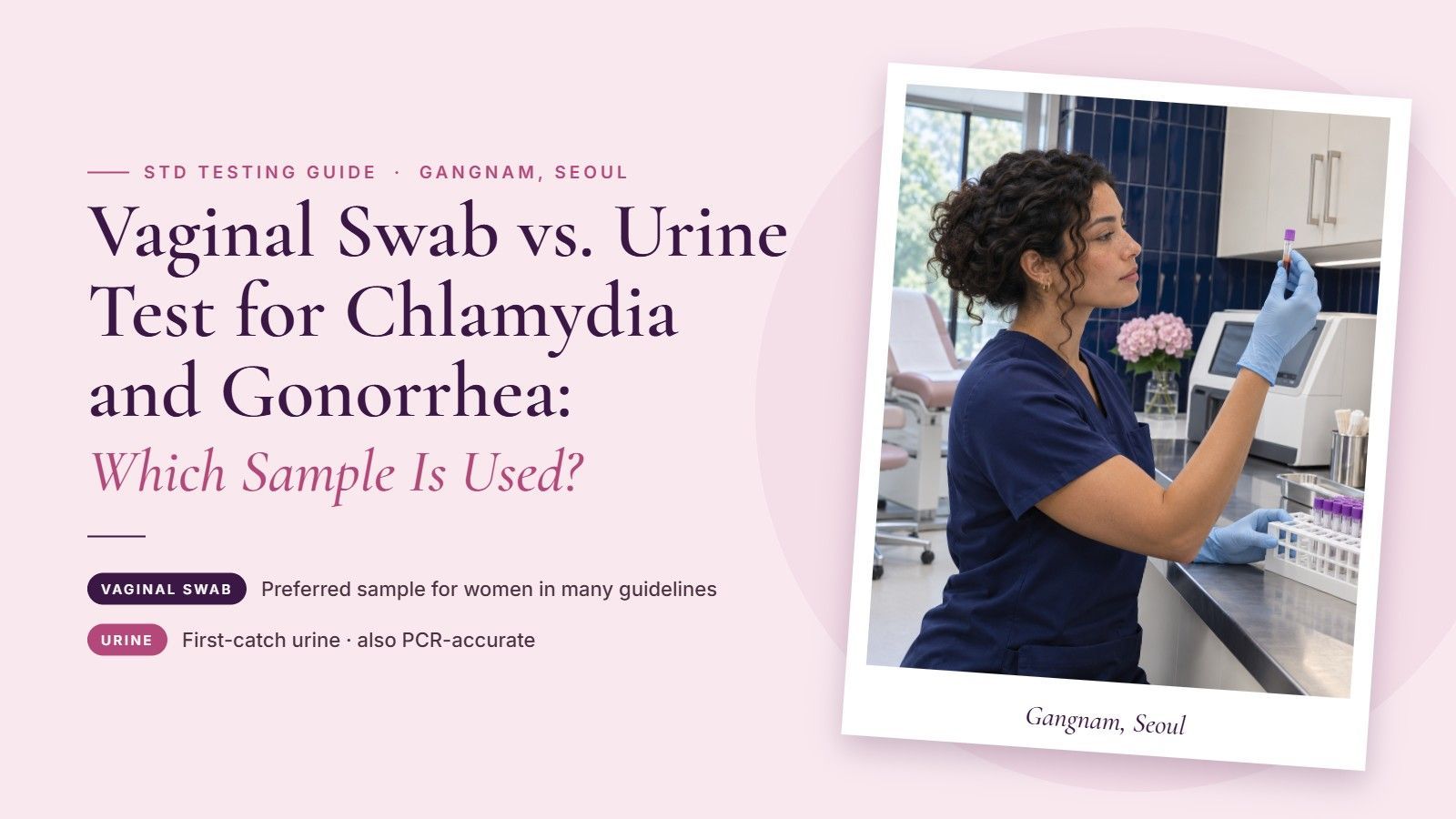
Vaginal Swab vs. Urine Test for Chlamydia and Gonorrhea: Which Sample Is Used?
Both samples can be tested with PCR (NAAT), which is highly accurate for chlamydia and gonorrhea. For women, a vaginal swab is often the preferred sample because it can detect slightly more infections, while a first-catch urine sample is a good alternative when a swab is not practical.
When you test for chlamydia and gonorrhea, the clinic may ask for a urine sample, a vaginal swab or both. Many patients wonder whether one is more accurate or more comfortable. The good news is that modern PCR tests work well on either sample. This guide explains the differences so you know what to expect.
How the two samples compare
| Feature | Vaginal swab | First-catch urine |
|---|---|---|
| Test method | PCR / NAAT | PCR / NAAT |
| Accuracy for women | Very high, often slightly higher | High |
| Comfort | Quick, usually painless | No contact needed |
| Self-collection | Often possible | Yes |
| Preparation | None in most cases | Avoid urinating for 1–2 hours |
| Extra tests on the same sample | Trichomoniasis, mycoplasma, other PCR targets | Often similar PCR targets |
When each sample is used
Vaginal swab
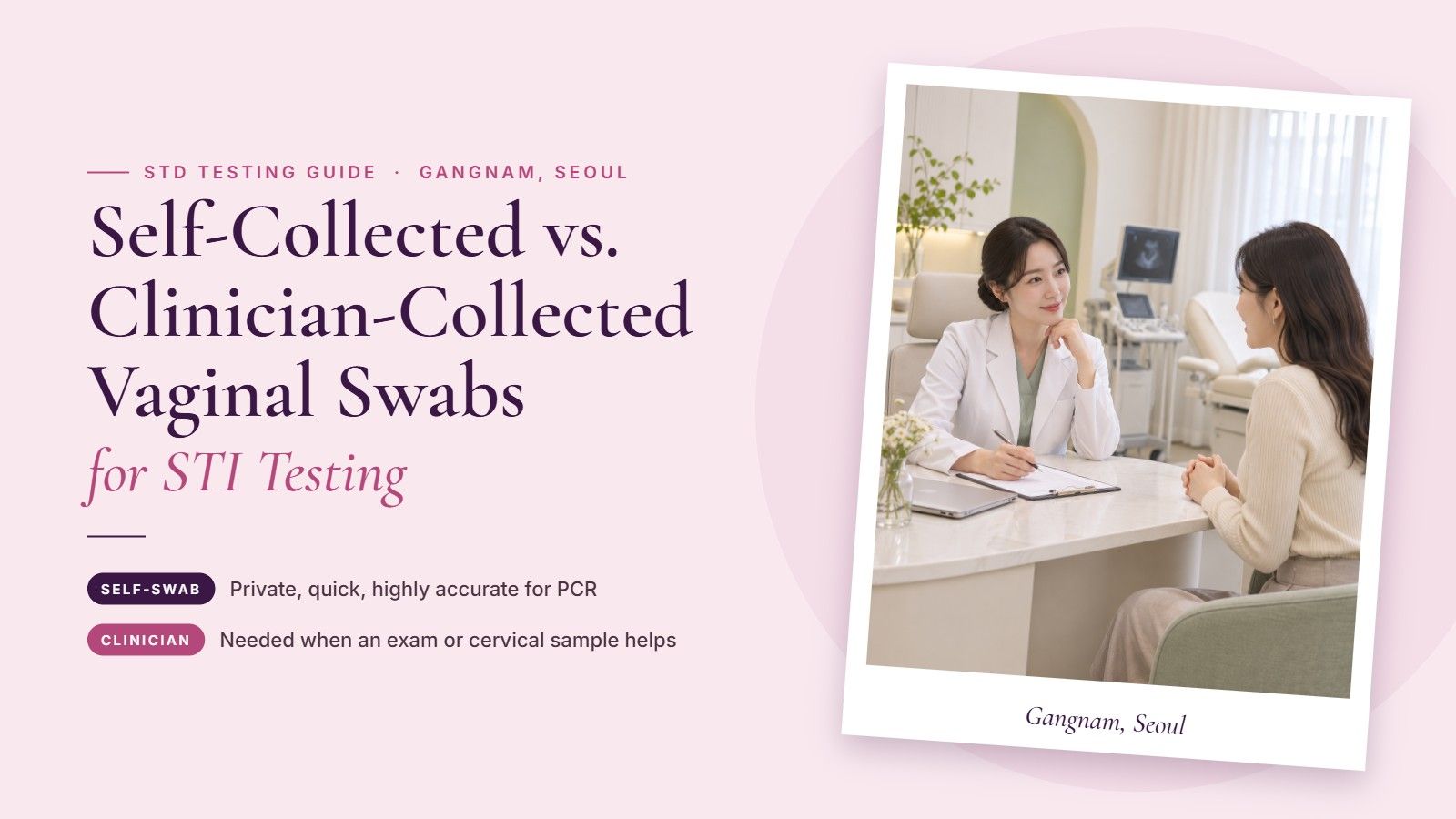
Commonly preferred for women because it samples the area where infection is found. It can be collected by you or by the clinician.
Urine
Useful when a swab is not possible or preferred. Collect the first part of the stream, not midstream.
Cervical swab
Taken during a speculum exam, often combined with a Pap smear or when symptoms need an exam.
Other sites
Throat or rectal swabs may be suggested depending on the type of sexual contact.
How to prepare
- For urine Do not urinate for at least 1–2 hours and collect the first part of the stream.
- For a swab No special preparation is usually needed.
- Antibiotics Tell the clinic if you recently took antibiotics, as they can affect results.
- Your period Light bleeding is usually fine. Ask the clinic if you are unsure.
What happens after testing
- Sample is sent to the lab PCR tests usually take one to three working days.
- Results are explained Ask how you will receive results and whether they can be shared in English.
- Treatment if positive Both infections are treated with antibiotics, and partners may need treatment too.
- Retesting A retest is often advised about three months after treatment to check for reinfection.
Frequently asked questions
Is a vaginal swab more accurate than a urine test?
For women, vaginal swabs are often slightly more sensitive, but both samples are highly accurate when tested with PCR.
Can I collect the vaginal swab myself?
Often yes. Self-collected vaginal swabs are widely used and perform very well for chlamydia and gonorrhea testing.
Why do I need to wait before giving a urine sample?
Holding urine for one to two hours lets bacteria collect, which improves accuracy. Collect the first part of the stream.
Does the swab hurt?
Most people find a vaginal swab quick and painless. It feels similar to inserting a tampon.
Can other STIs be tested on the same sample?
Yes. Many labs can also test the same sample for trichomoniasis, mycoplasma and other organisms.
Either sample works well with PCR
Choose the option you are comfortable with, and ask the clinic which sample they prefer for your situation.
Related guides
This article is for general information and does not replace a medical consultation. Tests, treatments and prices can vary. Please speak with a doctor about your individual situation.