Syphilis Screening vs. Confirmatory Testing: Why Might You Need Two Tests?
Syphilis testing usually uses two different types of blood tests. One type (non-treponemal, such as RPR or VDRL) screens and tracks activity, while the other (treponemal, such as TPHA, TPPA or EIA) confirms exposure. A positive first test is checked with the second to confirm the diagnosis and guide treatment.
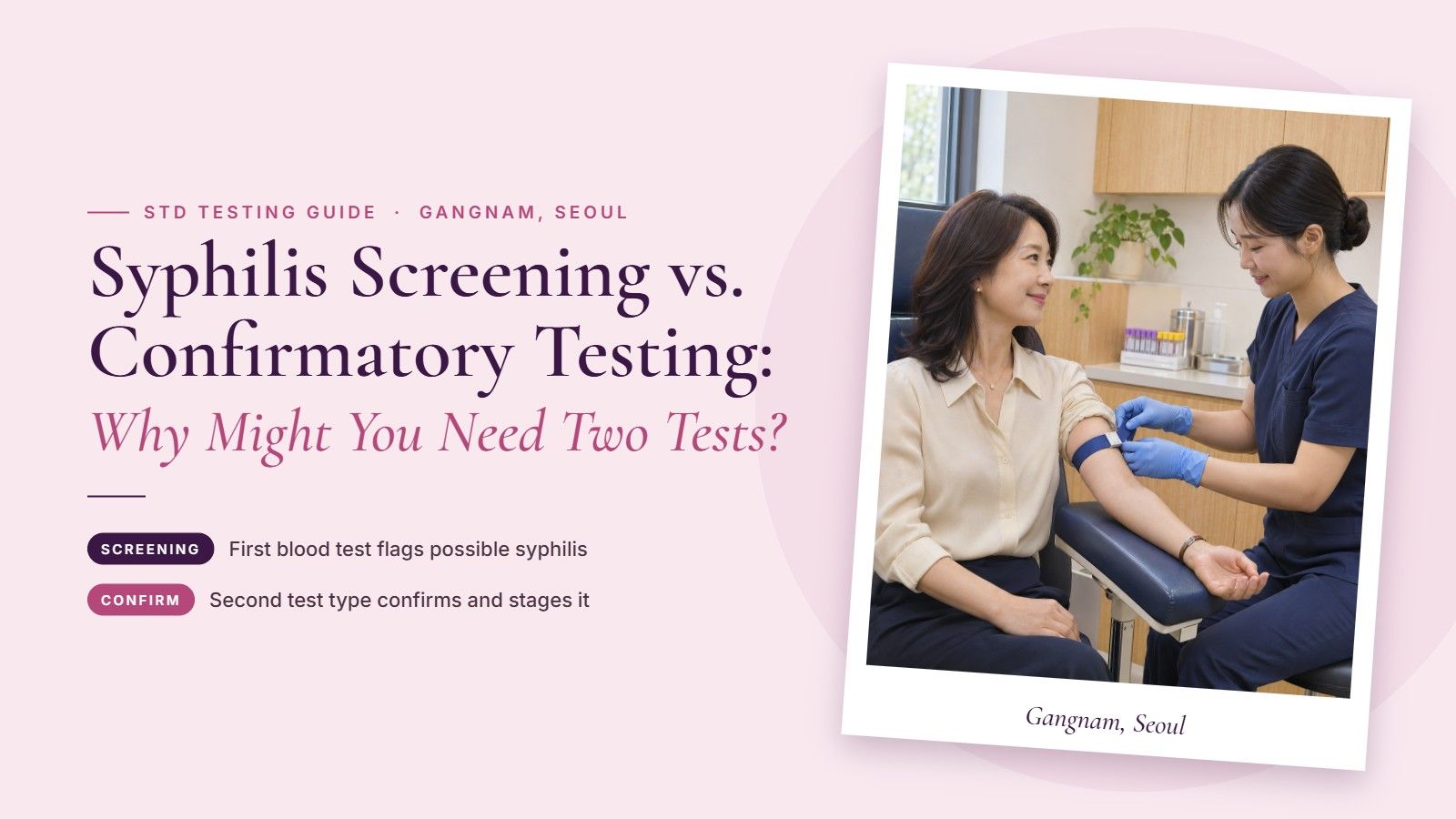
If your syphilis screening comes back reactive, the clinic will usually order another blood test. This does not mean something went wrong. Syphilis testing is designed as a two-step process because each test type answers a different question. Understanding how they work helps you make sense of your results.
The two types of syphilis tests
| Test type | Examples | What it shows |
|---|---|---|
| Non-treponemal | RPR, VDRL | Possible active infection; levels fall after treatment |
| Treponemal | TPHA, TPPA, EIA/CLIA | Exposure to syphilis; often stays positive for life |
Labs may run these in either order. Your doctor interprets the results together.
What different result combinations can mean
Both negative
No evidence of syphilis, if tested after the window period.
Both positive
Suggests current or past infection; your history and levels guide treatment.
Treponemal positive only
May mean a past treated infection or an early infection; more testing may be needed.
Non-treponemal positive only
May be a false positive caused by other conditions; confirmation is essential.
How follow-up works
- Confirm the result The second test type confirms or rules out infection.
- Treatment Syphilis is treated with antibiotics, most often penicillin.
- Track progress Non-treponemal levels are rechecked after treatment to confirm they are falling.
- Partner testing Recent partners are usually advised to test and may need treatment.
Questions to ask your doctor
- Which tests were done? Ask for the names of the tests and the numbers if available.
- Is this a past or current infection? History and repeat tests help answer this.
- When should I retest? Follow-up blood tests are usually scheduled over months.
- Do I need other tests? HIV testing is often recommended alongside syphilis testing.
Frequently asked questions
Why do I need a second syphilis test?
One test type can give false positives, and the other cannot tell past from current infection. Together they give a reliable answer.
What is RPR?
RPR is a non-treponemal blood test used to screen for syphilis and to track response to treatment.
Can a syphilis test be falsely positive?
Yes. Some conditions can cause a positive non-treponemal test, which is why confirmatory testing is used.
Will I always test positive after syphilis?
Treponemal tests often stay positive for life, even after successful treatment.
How soon can syphilis be detected?
Blood tests usually become reliable around three to six weeks after exposure. A retest at three months may be advised.
Two tests, one clear answer
If a syphilis result needs confirmation, the second test is part of normal care and helps your doctor choose the right treatment.
Related guides
This article is for general information and does not replace a medical consultation. Tests, treatments and prices can vary. Please speak with a doctor about your individual situation.