Full STD Panel in Gangnam: Which Infections Are Included and Which Tests Are Separate?
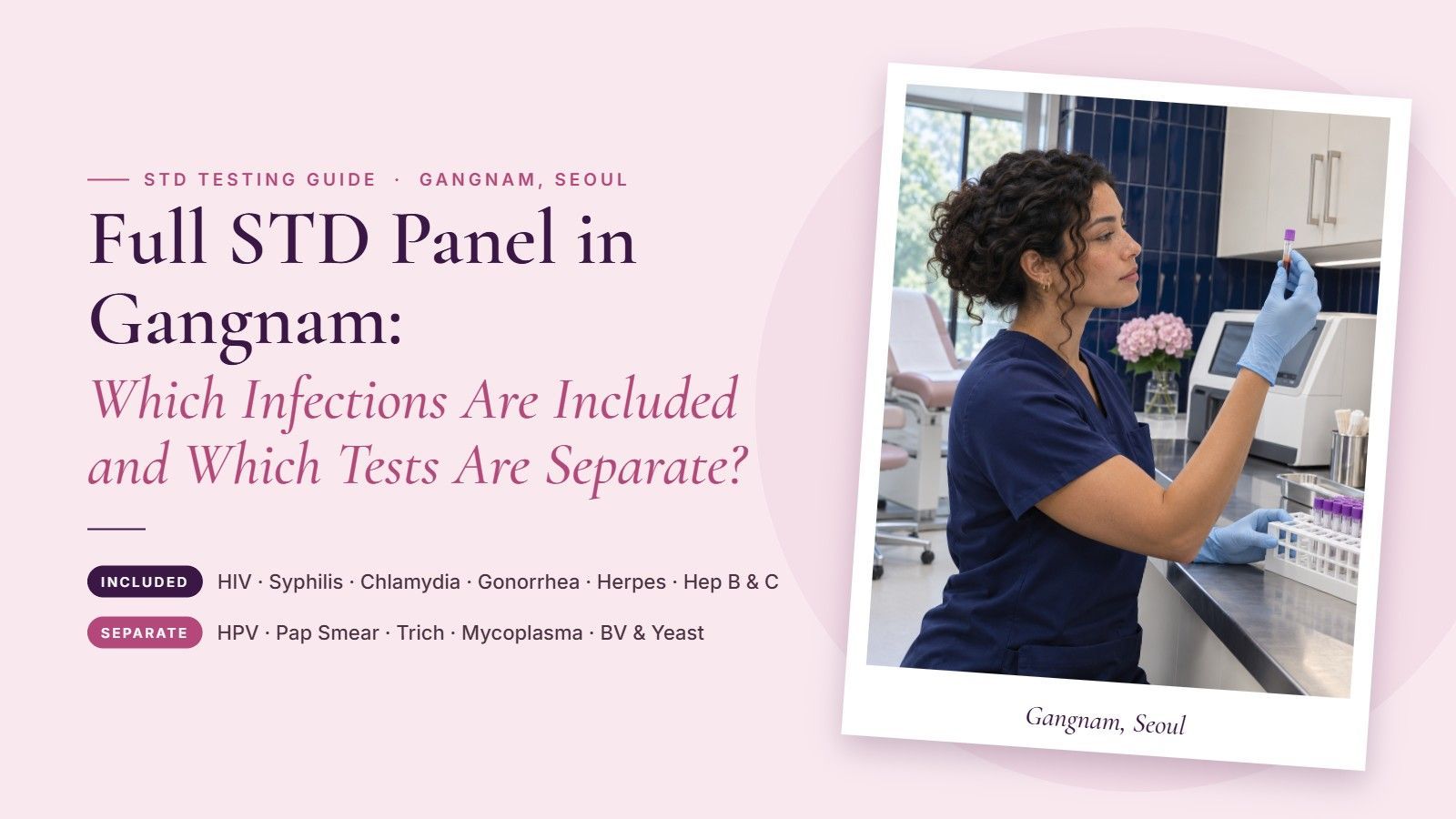
A full STD panel in Gangnam, Seoul usually checks for HIV, syphilis, chlamydia, gonorrhea, genital herpes (HSV-1/2) and hepatitis B and C. Trichomoniasis, Mycoplasma genitalium, ureaplasma and HPV are often added depending on your history, while a Pap smear, vaginal infection tests (BV, yeast) and herpes sore swabs are separate tests.
"Full STD panel" sounds like it should mean everything , but in Korea (as in most countries) there is no single official definition. Each clinic builds its own package, so two "full panels" in Gangnam can cover different infections. This guide explains, in plain English, what a typical full panel includes, which tests are usually ordered separately, when to test after possible exposure, and what to expect at your appointment as an international patient in Gangnam.
What a full STD panel in Gangnam usually includes
In a typical full STD panel in Gangnam, the core screen covers the infections that are most common or most important to catch early. Here is what is tested, how, and what is typically added on:
| Infection | Sample | Core panel? |
|---|---|---|
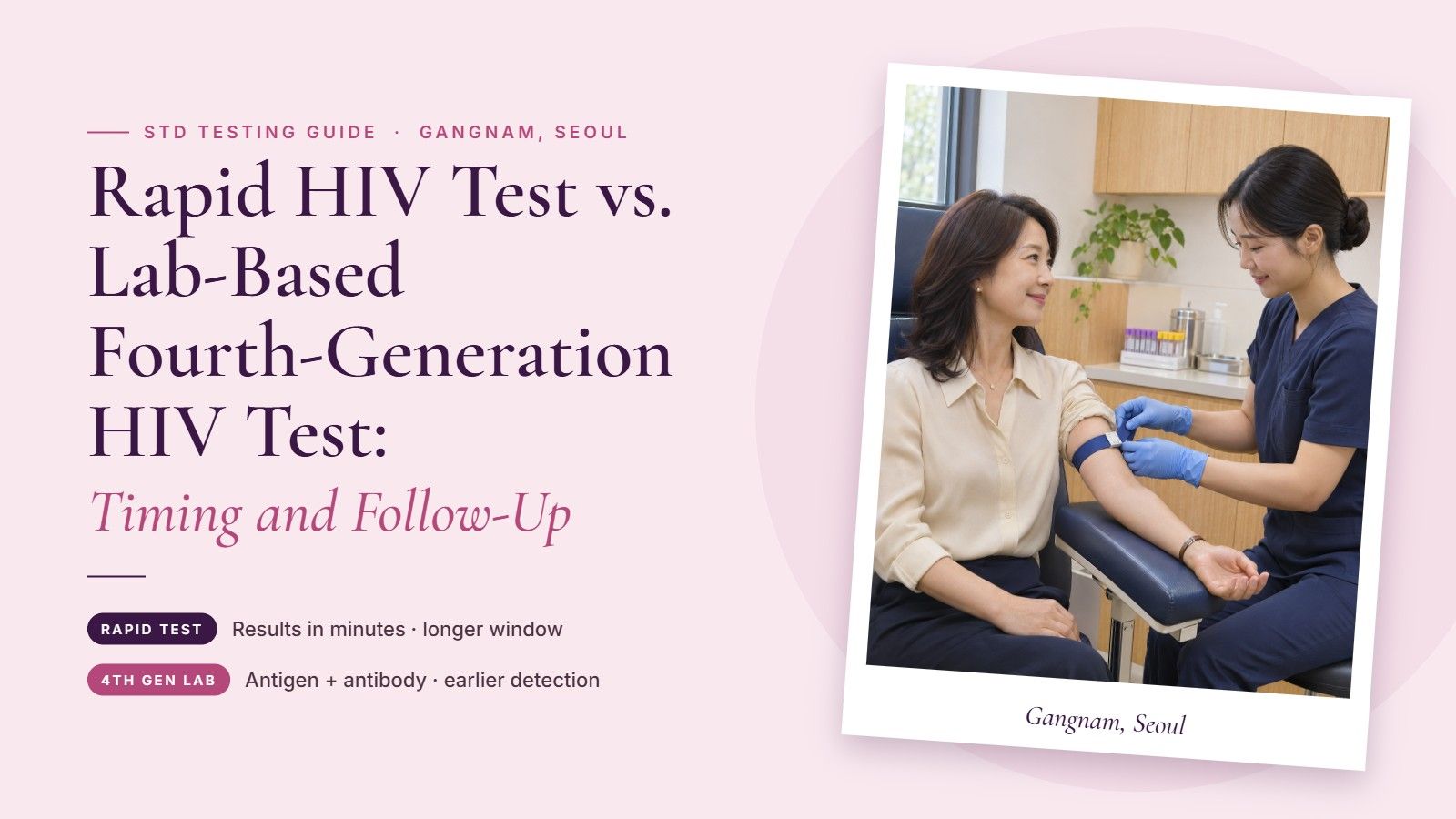
| HIV | Blood (antigen/ |
Included |
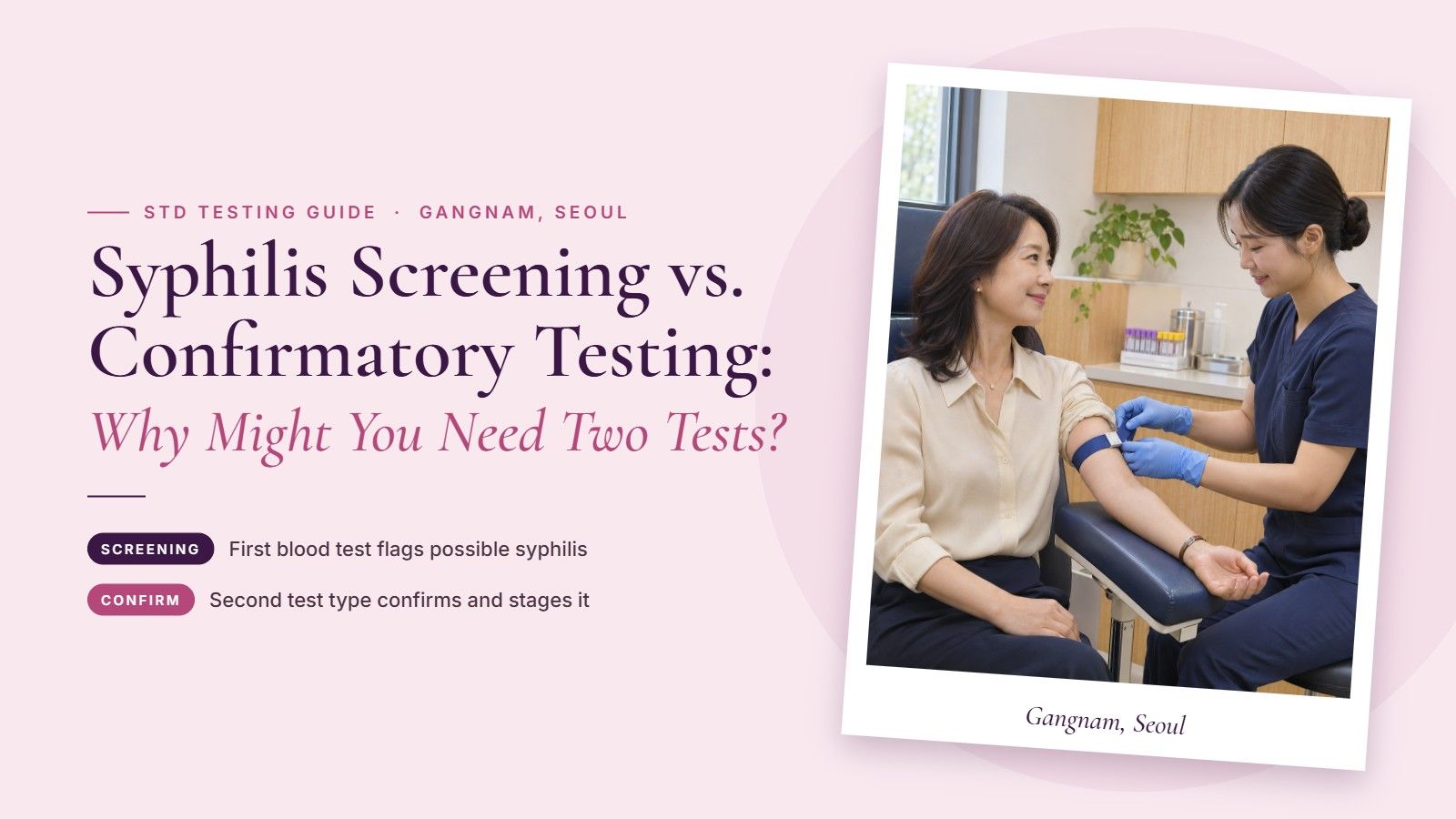
| Syphilis | Blood | Included |
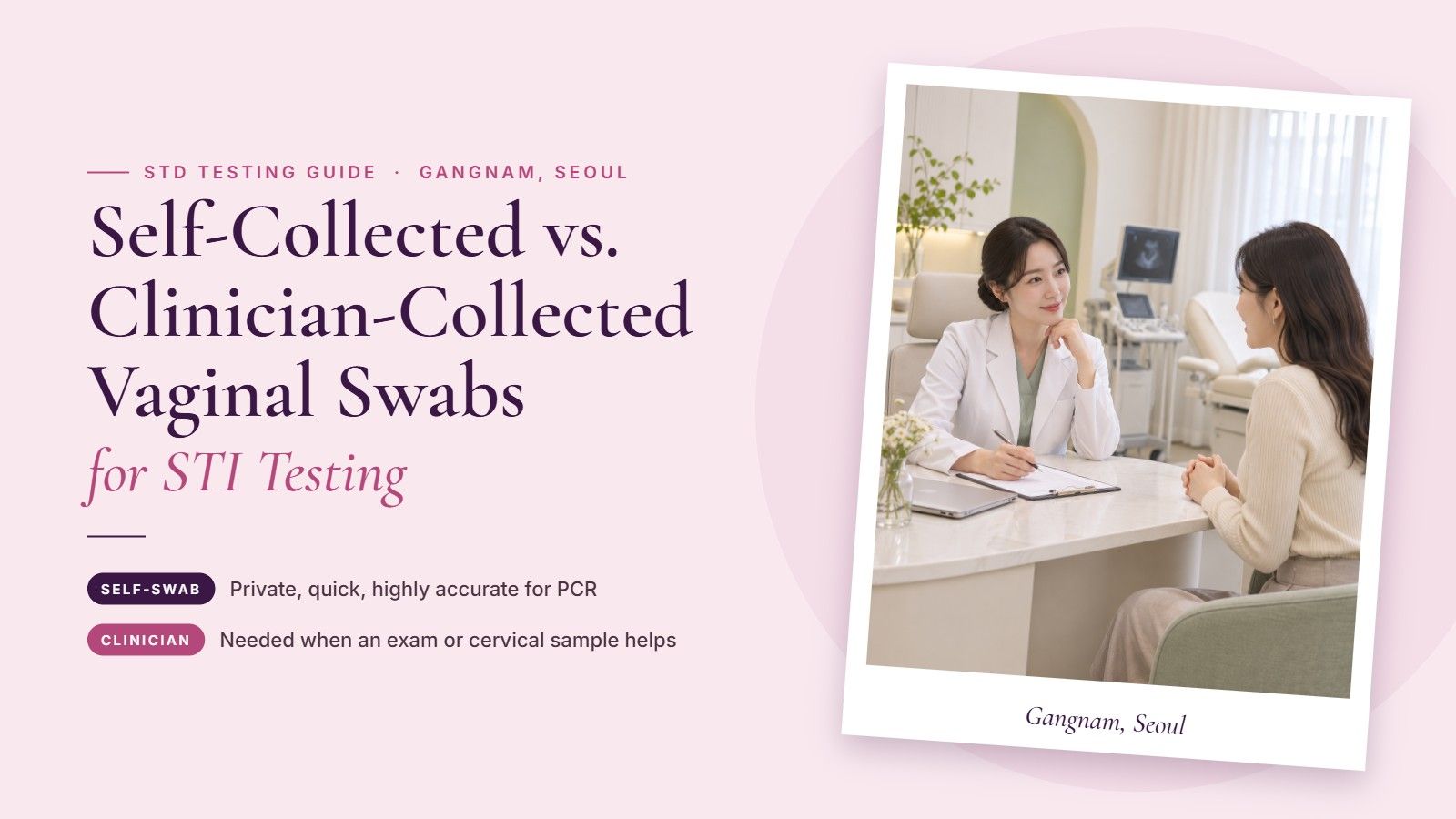
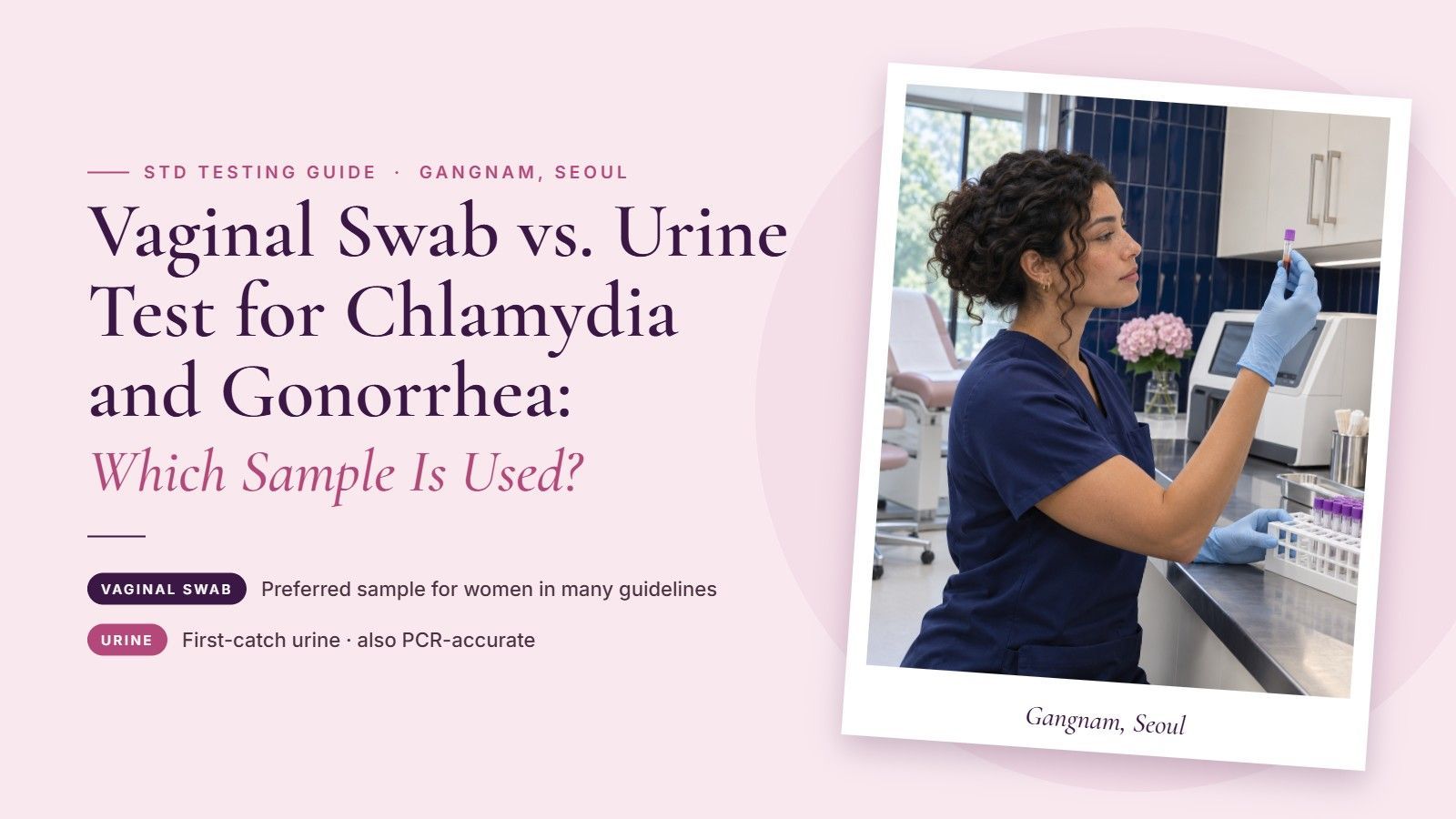
| Chlamydia | Urine or swab (PCR) | Included |
| Gonorrhea | Urine or swab (PCR) | Included |
| Genital herpes (HSV-1/2) | Blood antibodies, or swab of a sore | Included |
| Hepatitis B & C | Blood | Included |
| Trichomoniasis | Swab or urine (PCR) | Add-on |
| Mycoplasma genitalium | Swab or urine (PCR) | Add-on |
| Ureaplasma | Swab or urine (PCR) | Add-on |
| HPV | Cervical swab | Add-on |
Panel contents can change and are tailored to each patient. Confirm the exact list before your visit.
Which tests are usually separate, and why
Some tests are left out of a standard panel not because they are unimportant, but because they need a different sample, a pelvic exam, or are only useful in certain situations. These are the ones international patients ask about most:
HPV test & Pap smear
Both need a cervical sample taken during a pelvic exam. A Pap smear looks for abnormal cervical cells, while an HPV test looks for the virus itself. They are often booked together as cervical screening.
Trich, Mycoplasma & Ureaplasma
Added when you have symptoms such as unusual discharge, burning or pelvic discomfort, a partner with symptoms, or infections that keep coming back.
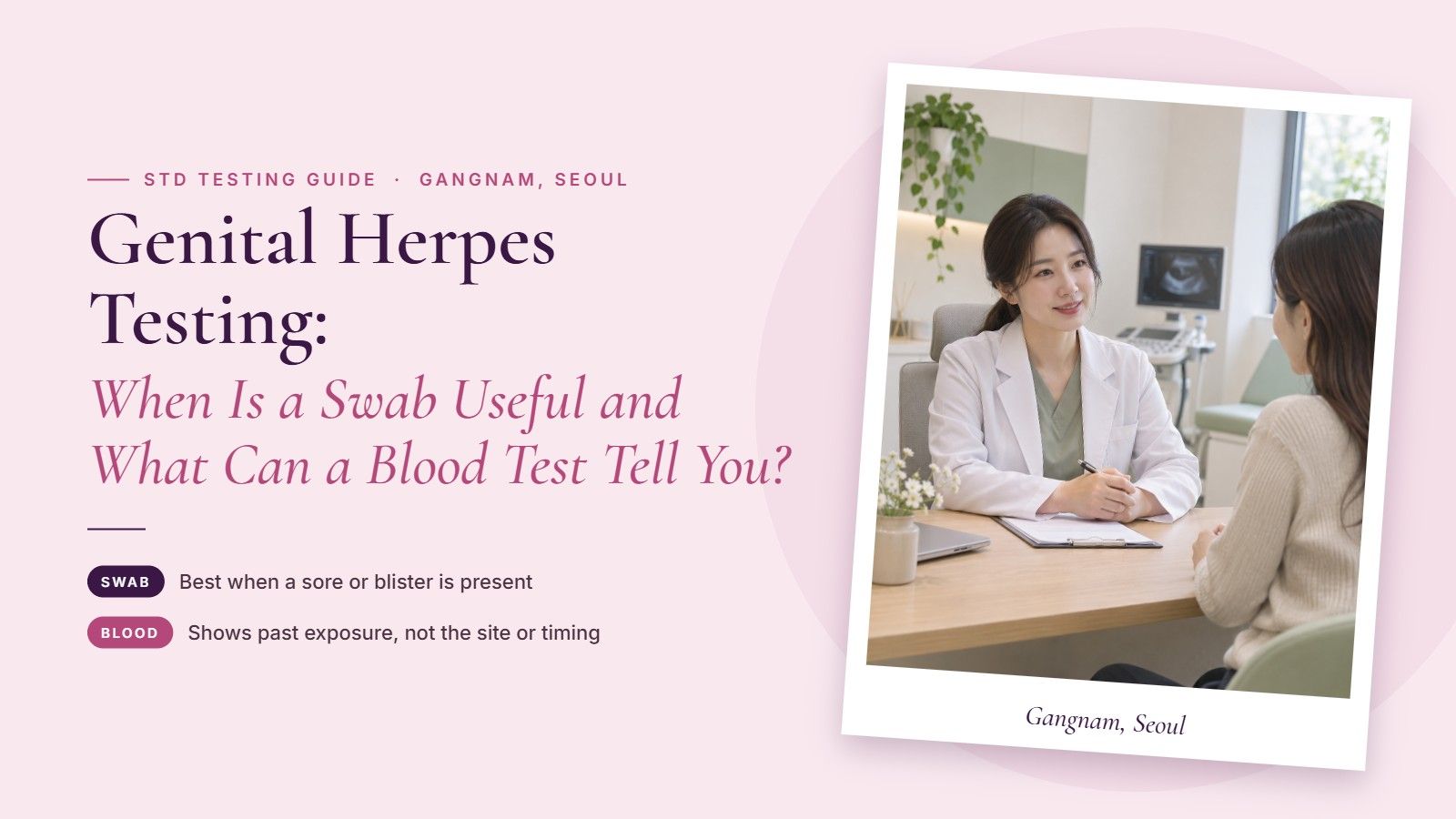
Herpes sore swab
If you have a blister or sore right now, a swab of the sore is the most accurate test. A blood test only shows past exposure and cannot tell where or when infection happened.
Vaginal infections (BV & yeast)
Bacterial vaginosis and yeast infections are not STDs, but their symptoms overlap. If you have itching, odor or discharge, ask for a vaginal infection check as well.
Genital warts
Warts are usually diagnosed by looking at them, not by a lab panel. Wart removal is a separate treatment.
Prevention
The Gardasil HPV vaccine and hepatitis B vaccination are prevention, not testing, and are arranged separately.
When should you get tested after possible exposure?
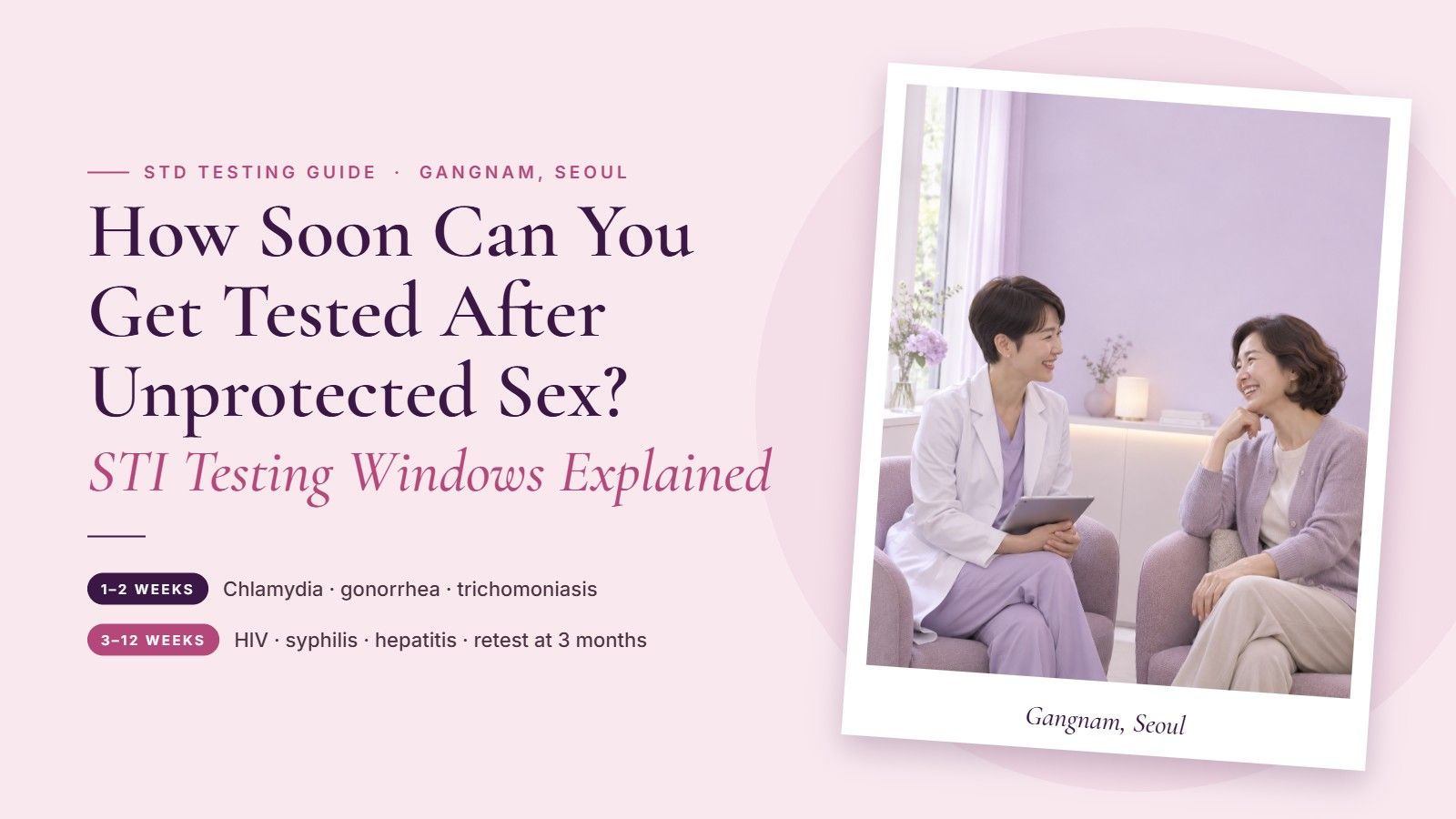
Testing too early is the most common reason for a false sense of security. Every infection has a "window period", the time between exposure and when a test can reliably detect it. These are general guidelines; your doctor may suggest retesting later.
| Infection | Earliest useful test | Retest to be sure |
|---|---|---|
| Chlamydia, gonorrhea, trichomoniasis | About 1–2 weeks | If symptoms appear or after treatment, as advised |
| HIV (lab antigen/antibody test) | About 3–6 weeks | At around 3 months |
| Syphilis | About 3–6 weeks | At around 3 months |
| Hepatitis B | About 3–6 weeks | At around 3 months |
| Hepatitis C (antibody) | About 8–12 weeks | As advised by your doctor |
| Herpes (blood antibodies) | Up to 12 weeks or more | A sore swab is better if you have symptoms |
If you had a high-risk exposure to HIV within the last 72 hours, seek medical care urgently. Post-exposure medication (PEP) works best when started as early as possible.
What happens during your STD test visit in Gangnam
- Book and share your concern Many clinics in Gangnam offer same-day appointments, and a referral is usually not needed. If you need English support, ask about it when you book.
- Private one-to-one consultation The doctor asks about symptoms, timing and history so the panel fits you, instead of testing for things you do not need.
- Sample collection Depending on your panel: a blood draw, a urine sample and/or a quick vaginal swab, usually in the same visit.
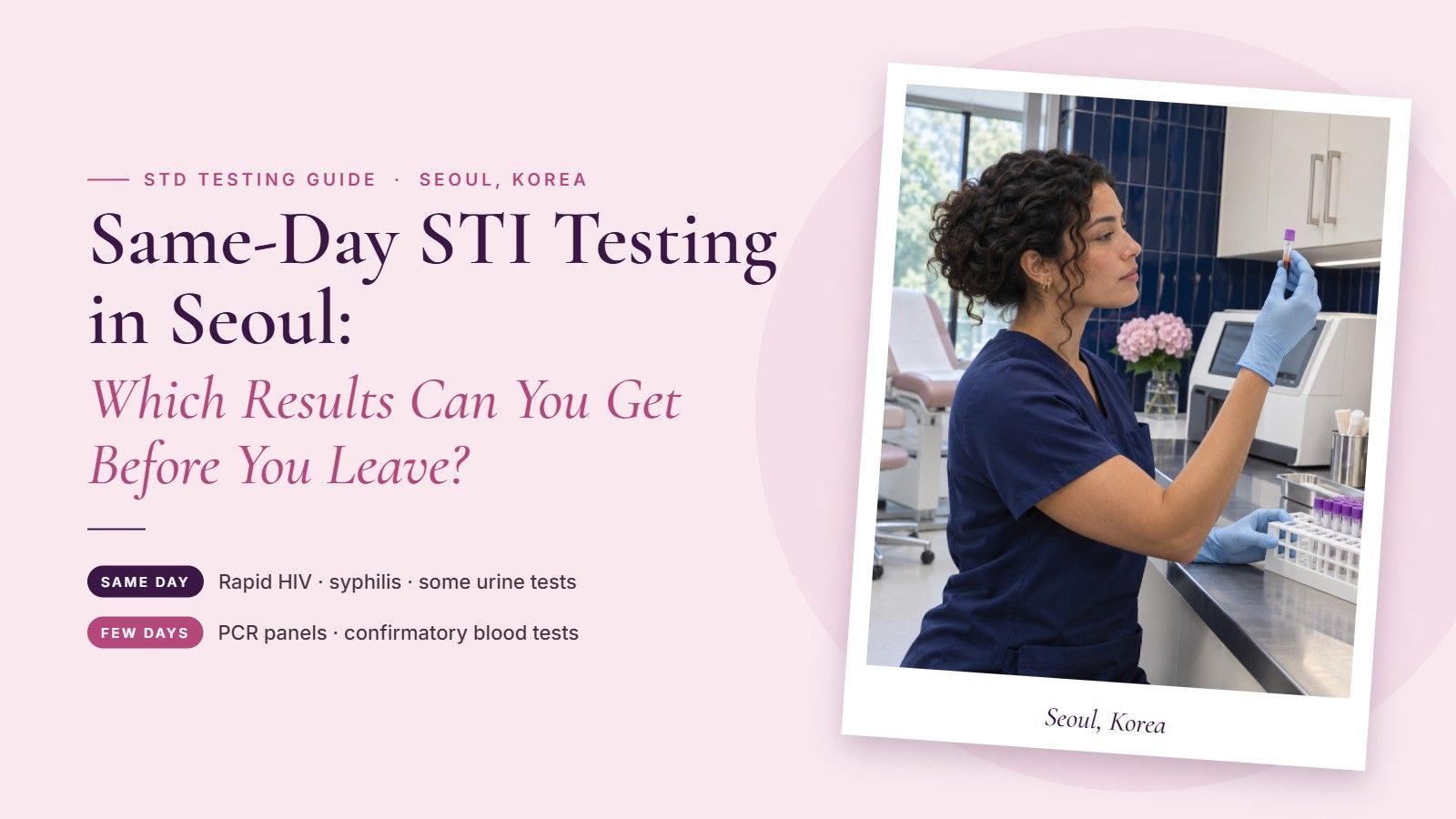
- Results Some rapid tests can be ready the same day. Blood and PCR results generally come back within a few days.
- Treatment and follow-up If anything is positive, your doctor explains the result, discusses treatment and advises on partner testing and retesting.
How much does a full STD panel cost in Gangnam?
Typical price range at private clinics in Seoul, depending on how many infections are included. This is a general market range, not a set price. Always confirm the exact panel price and any add-on costs before testing.
Screening panels without symptoms are usually paid out of pocket, including by travelers and residents without Korean National Health Insurance. If you need a receipt or medical documentation for your own insurance, ask at the front desk when you pay.
Do you need a full panel, or a targeted test?
- A full panel makes sense if you have a new partner, more than one partner, a partner who tested positive, or simply have not been tested before.
- A targeted test may be enough if you are worried about one specific exposure and the timing is clear. Your doctor will tell you honestly.
- See a doctor first if you have symptoms such as sores, pelvic pain, burning, bleeding after sex or unusual discharge. Symptoms change which tests are useful.
- Pregnant or planning pregnancy? Mention it, as some infections are checked routinely during pregnancy care.
STD testing for foreigners in Gangnam: privacy and language
Many international patients delay testing because they worry about language barriers or being judged. In Gangnam, many women's clinics offer consultations in English and female doctors, and medical information is kept confidential in Korea. Before you book, it helps to ask a few simple questions:
- Is English support available during the consultation?
- Can I request a female doctor?
- Exactly which infections are included in the panel price?
- How and when will I receive my results?
Frequently asked questions
What infections are included in a full STD panel in Gangnam?
A typical full panel covers HIV, syphilis, chlamydia, gonorrhea, genital herpes (HSV-1/2), and hepatitis B and C. Trichomoniasis, Mycoplasma genitalium, ureaplasma and HPV can be added depending on your history.
Is HPV included in a full STD panel?
Usually not by default. HPV testing needs a cervical swab taken during a pelvic exam, so it is often added on or done together with a Pap smear as cervical screening.
How long do STD test results take in Seoul?
Some rapid tests can give results the same day. Blood tests and PCR tests for chlamydia, gonorrhea and similar infections generally take a few days.
Can I get an STD test in Gangnam without Korean health insurance?
Yes. Tourists, students and expats can be tested without Korean National Health Insurance. Screening panels are usually paid out of pocket, and a referral is usually not needed.
How soon after sex should I get tested?
Chlamydia and gonorrhea can usually be detected about 1–2 weeks after exposure. HIV, syphilis and hepatitis B often need 3–6 weeks, with a retest at around 3 months to be sure.
Will the test hurt?
Most people find it quick and easy: a standard blood draw, a urine sample, and sometimes a brief vaginal or cervical swab that feels similar to a Pap smear.
Is STD testing confidential for foreigners in Korea?
Yes. Medical information is confidential in Korea, and many clinics in Gangnam offer private one-to-one consultations in English, often with female doctors available.
Not sure which tests you need?
Your history and timing decide the right panel. Bring your exposure date, any symptoms and past test results to your appointment so the doctor can choose the tests that actually matter for you.
Related guides
This article is for general information and does not replace a medical consultation. Test panels, window periods and prices can vary. Please speak with a doctor about your individual situation.