Rapid HIV Test vs. Lab-Based Fourth-Generation HIV Test: Timing and Follow-Up
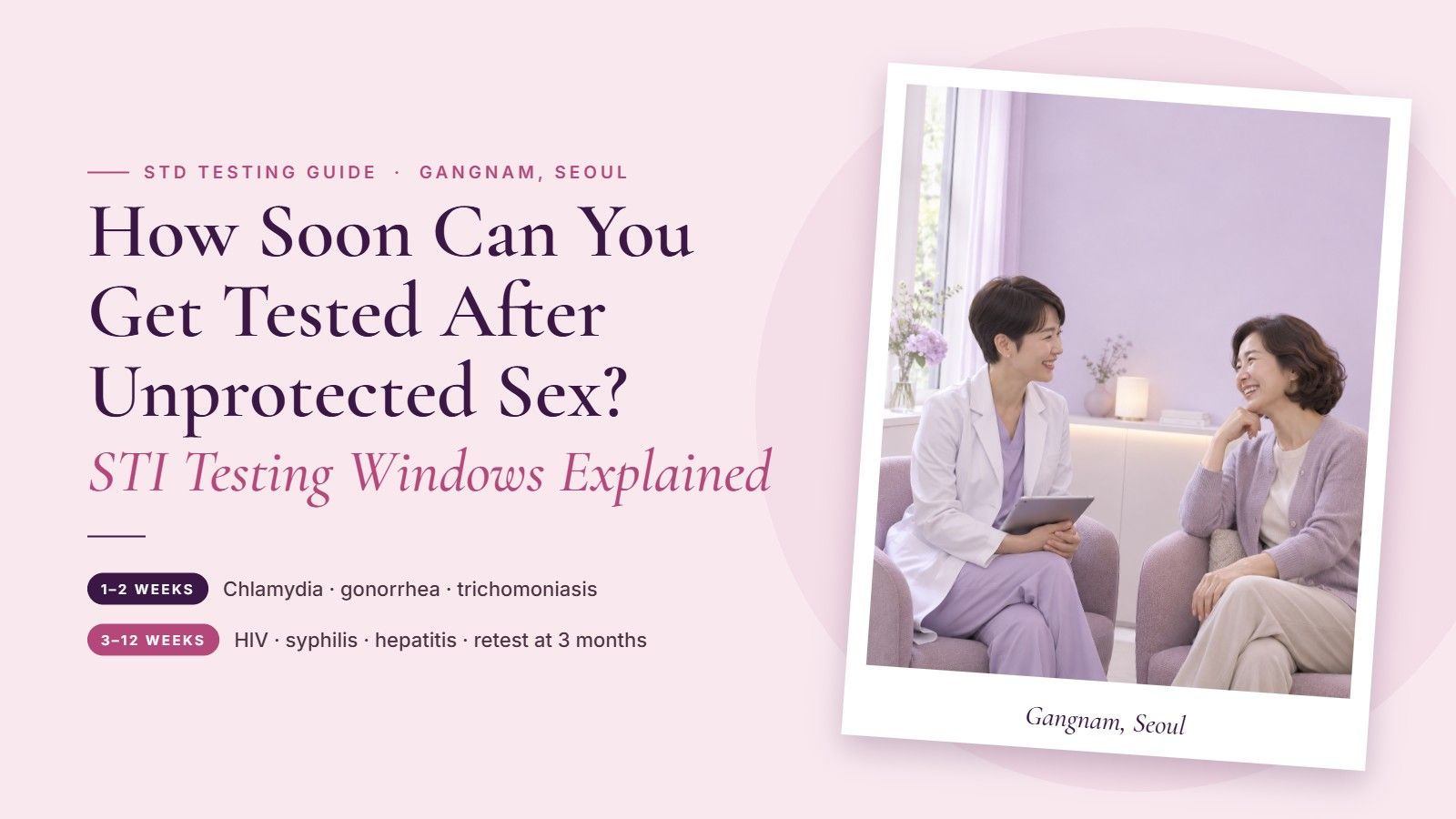
A fourth-generation lab test detects both HIV antigen and antibodies, so it usually becomes reliable sooner, often around 3–6 weeks after exposure. Many rapid tests detect antibodies and may need longer. Positive rapid results always need confirmation, and a retest around 3 months is often advised.
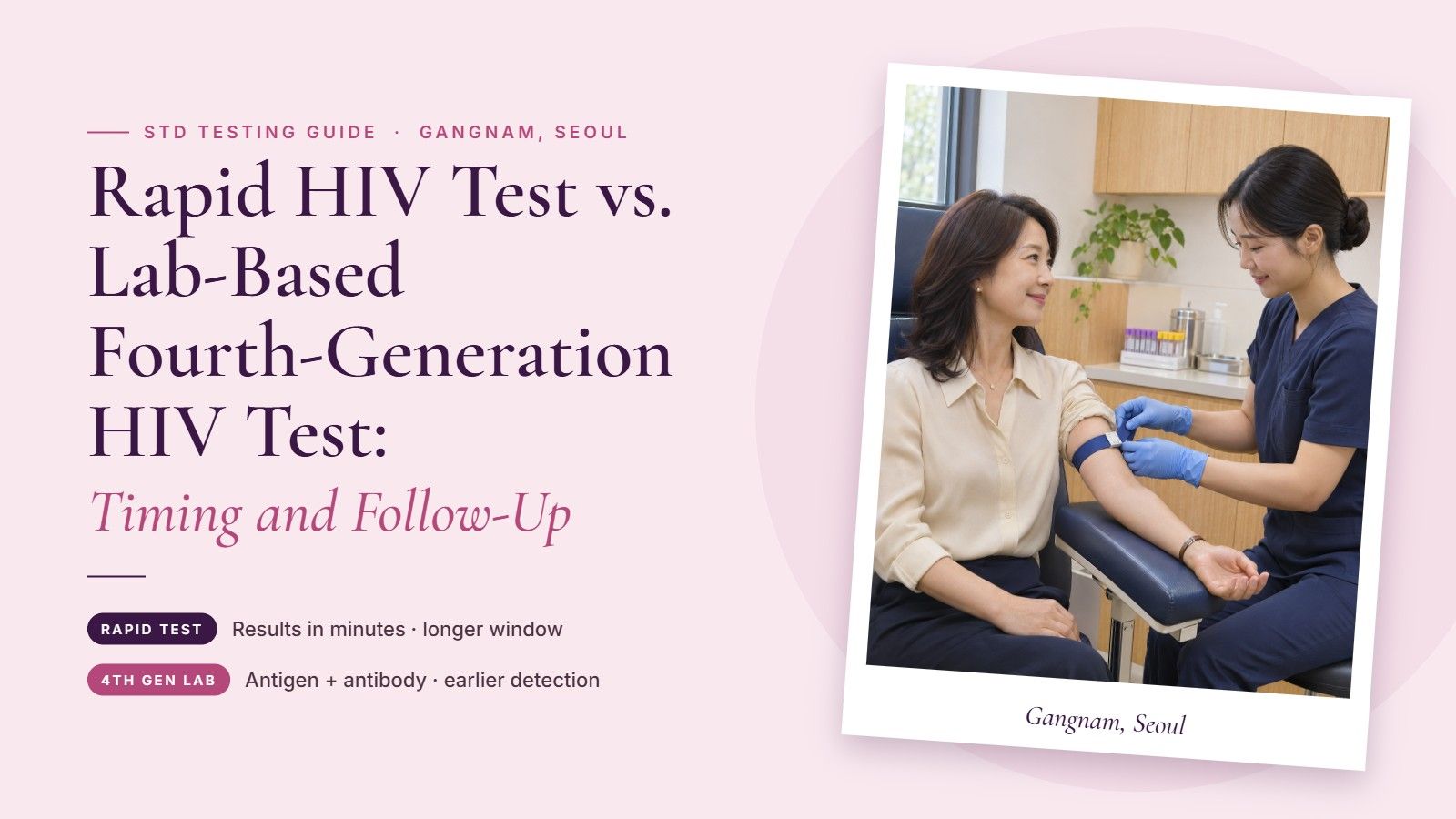
HIV testing in Seoul is quick and confidential, but there is more than one type of test. Rapid tests give results in minutes, while fourth-generation lab tests take a little longer but can detect infection earlier. Knowing the difference helps you choose the right test for your timing and understand what a negative or positive result really means.
How the two tests compare
| Feature | Rapid HIV test | 4th-generation lab test |
|---|---|---|
| What it detects | Usually antibodies (some detect antigen too) | p24 antigen + antibodies |
| Sample | Finger-prick blood or oral fluid | Blood draw |
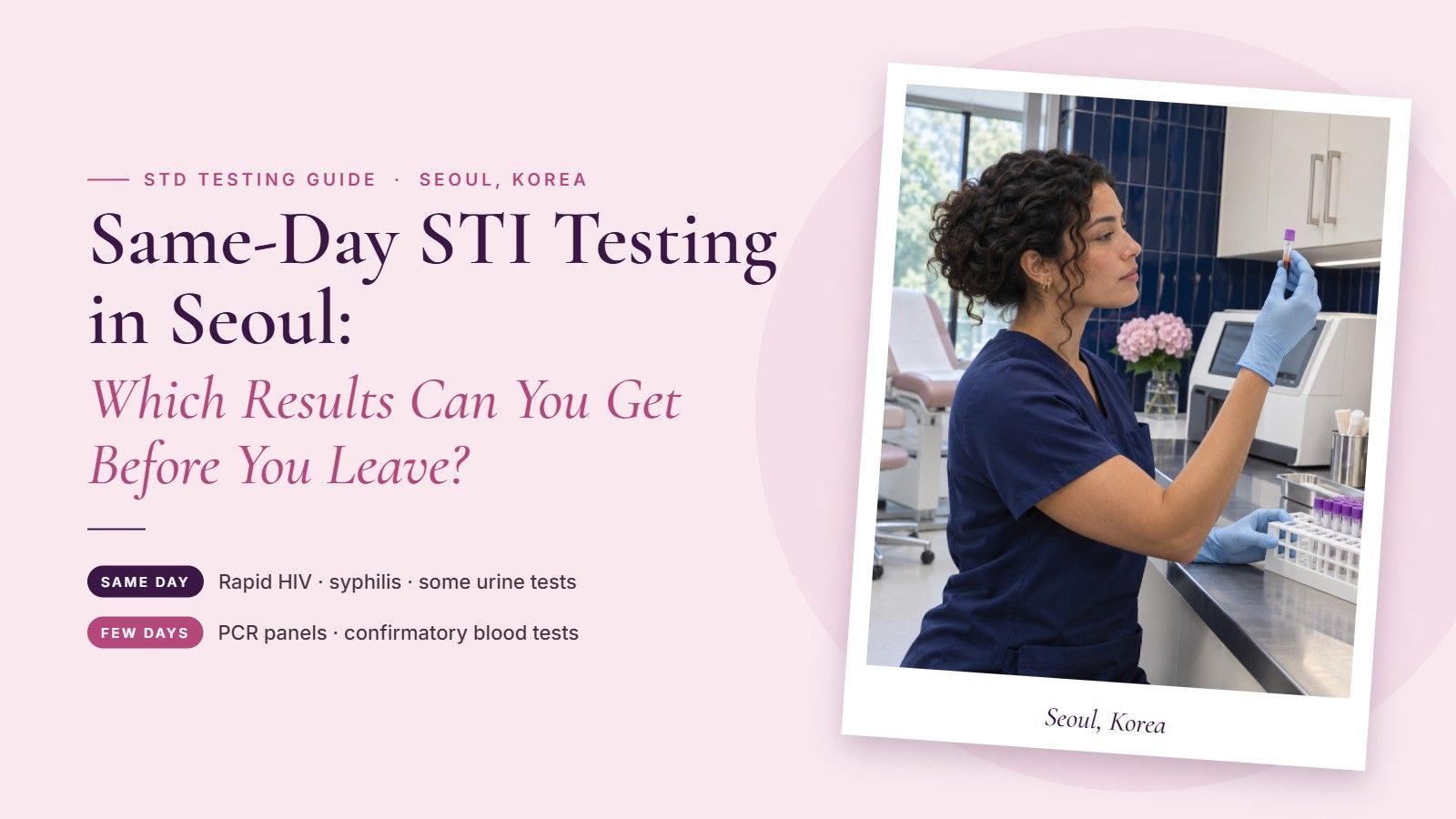
| Result time | About 15–30 minutes | Usually 1–2 days |
| Earliest reliable time | Often later than lab tests | Often around 3–6 weeks |
| Positive result | Needs confirmatory testing | Followed by confirmatory testing |
Which test should you choose?
Recent exposure
A lab-based fourth-generation test is usually preferred because it can detect infection earlier.
Routine screening
A rapid test is convenient when the last exposure was months ago.
Positive rapid result
Always followed by lab confirmation before any diagnosis.
Very high-risk exposure
Within 72 hours, ask about PEP first. Testing alone is not enough.
Follow-up after an HIV test
- Negative inside the window Retest after the window period, often around three months after exposure.
- Negative after the window Usually considered reliable if there has been no new exposure.
- Positive rapid test A lab test confirms the result.
- Confirmed positive Referral to an HIV specialist for treatment, which is highly effective.
Prevention questions to ask
- PEP Medication started within 72 hours after a possible exposure.
- PrEP Ongoing medication for people at higher risk. Ask where it is available.
- Other STIs HIV testing is often combined with syphilis and hepatitis tests.
- Partners Discuss testing for partners if a result is positive.
Frequently asked questions
Which HIV test is more accurate?
Both are accurate after their window periods. Fourth-generation lab tests detect infection earlier because they look for antigen as well as antibodies.
How soon after exposure can a 4th-generation test detect HIV?
Many fourth-generation tests detect most infections around three to six weeks after exposure, with a retest often advised at three months.
Is a rapid HIV test enough?
It is useful for screening if enough time has passed since exposure. A positive result always needs lab confirmation.
Is HIV testing confidential in Korea?
Yes. Medical information is confidential, and many clinics in Seoul offer private HIV testing.
What should I do after a high-risk exposure?
Seek care within 72 hours to ask about PEP, then plan testing according to the window period.
Match the test to your timing
Tell the clinic when the exposure happened. That decides whether a rapid test is enough or a lab test is better.
Related guides
This article is for general information and does not replace a medical consultation. Tests, treatments and prices can vary. Please speak with a doctor about your individual situation.