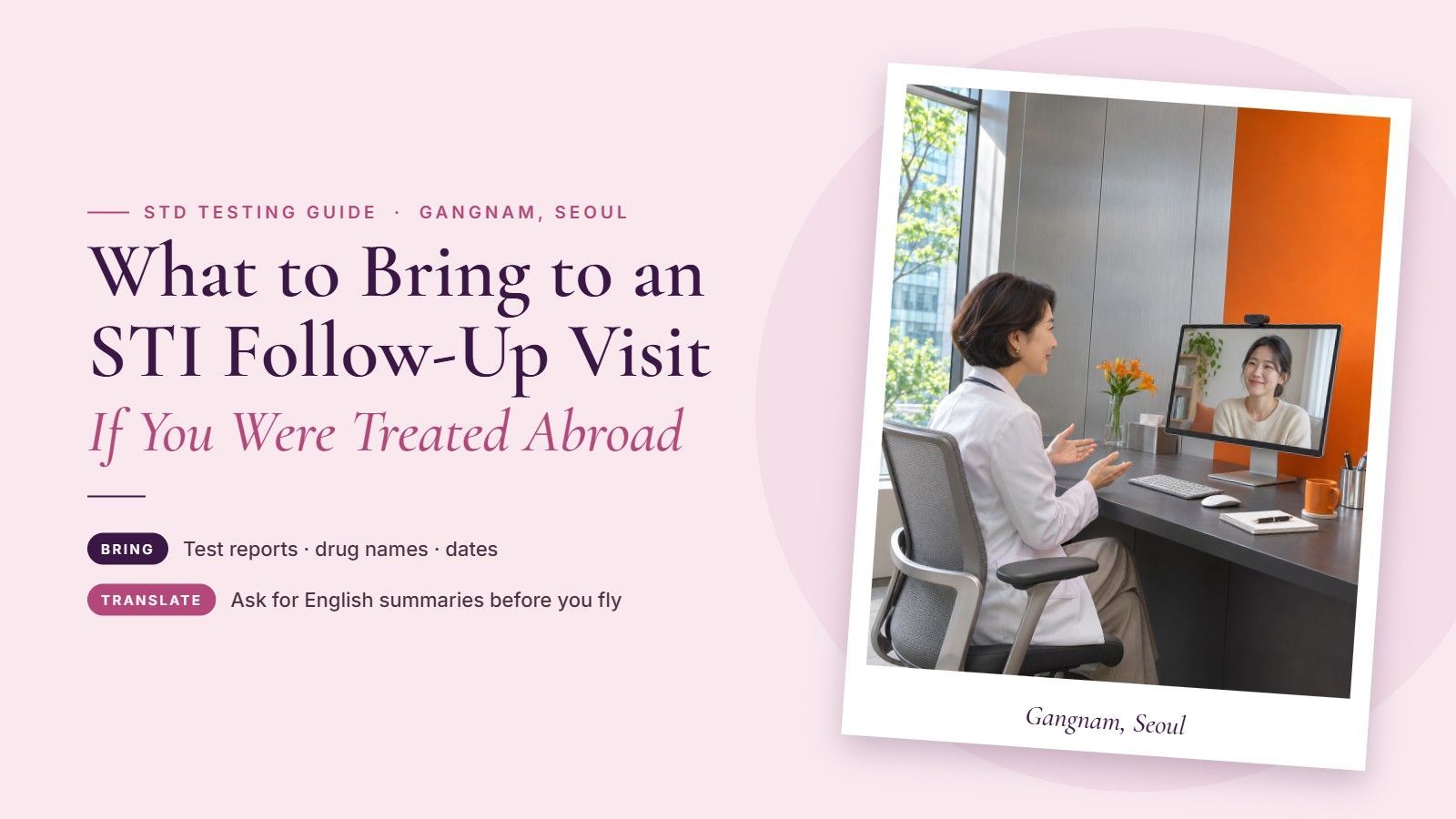
What to Bring to an STI Follow-Up Visit If You Were Treated Abroad
Bring your test reports(with test names and dates), the medication name, dose and dates you took, any partner treatment details, and a list of current symptoms. English documents are usually fine. These help your Seoul doctor decide whether you need a test of cure, a retest or further treatment.
Many expats and travellers start STI care in one country and finish it in another. Without records, a new doctor may have to repeat tests or guess what was done. A few documents make the follow-up visit in Seoul faster, cheaper and more accurate.
What to bring
| Document | Why it helps |
|---|---|
| Lab reports | Shows which infection was found and how it was tested |
| Prescription or medicine box | Confirms the exact drug and dose |
| Treatment dates | Determines when a test of cure or retest is due |
| Partner treatment details | Helps judge reinfection risk |
| Symptom notes | Shows whether treatment worked |
If you don't have documents
Photos are fine
A photo of the box, label or report on your phone helps.
Ask for records
Many clinics abroad can email results on request.
Describe what you remember
Even approximate dates help.
Expect some retesting
Your doctor may repeat tests if information is missing.
What happens at the follow-up visit
- Review your records The doctor checks the diagnosis and treatment given.
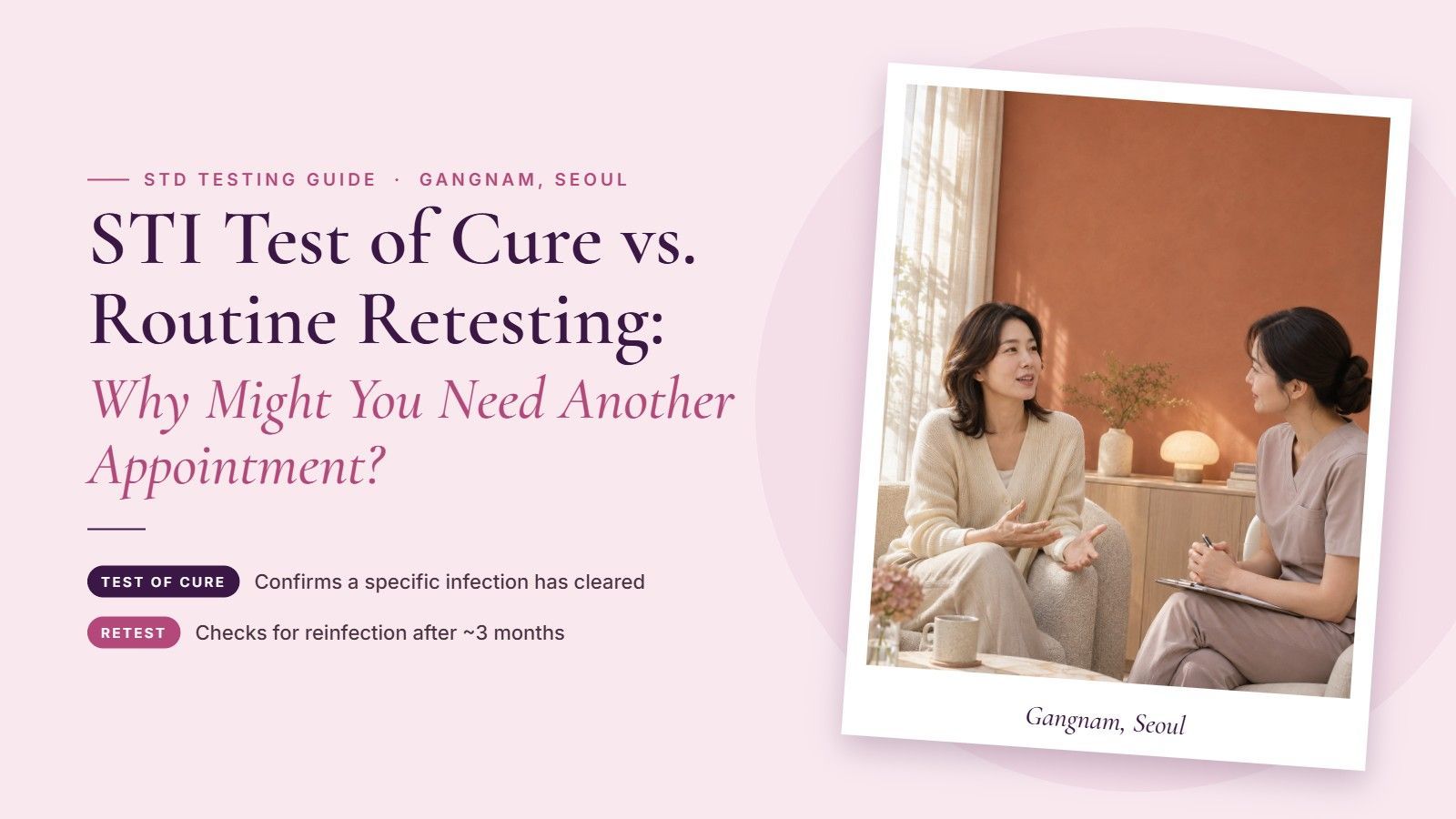
- Decide on testing Test of cure, routine retest or new screening.
- Check symptoms An exam may be done if symptoms continue.
- Plan next steps Further treatment, partner testing or a future retest date.
Tips for international patients
- Translate if needed English is widely understood; other languages may need a short translation.
- Keep copies Save results from Seoul for your home doctor.
- Ask about timing Testing too soon after treatment can be misleading.
- Bring a list Write your questions before the visit.
Frequently asked questions
Do I need to repeat tests done abroad?
Not always. Clear reports with test names and dates may mean only follow-up testing is needed.
Are English medical documents accepted in Seoul?
Yes, English reports are generally accepted by doctors in Seoul.
What if my medication isn't available in Korea?
Your doctor can suggest an equivalent treatment if more is needed.
When should I have a follow-up test?
It depends on the infection and treatment date. A retest is often advised around three months after treatment.
Can I get my Seoul results in English?
Many clinics can provide results or a summary in English. Ask when you book.
Records make follow-up easier
Bring what you have, even photos. It helps your doctor pick up exactly where your care left off.
Related guides
This article is for general information and does not replace a medical consultation. Tests, treatments and prices can vary. Please speak with a doctor about your individual situation.