November 22, 2026

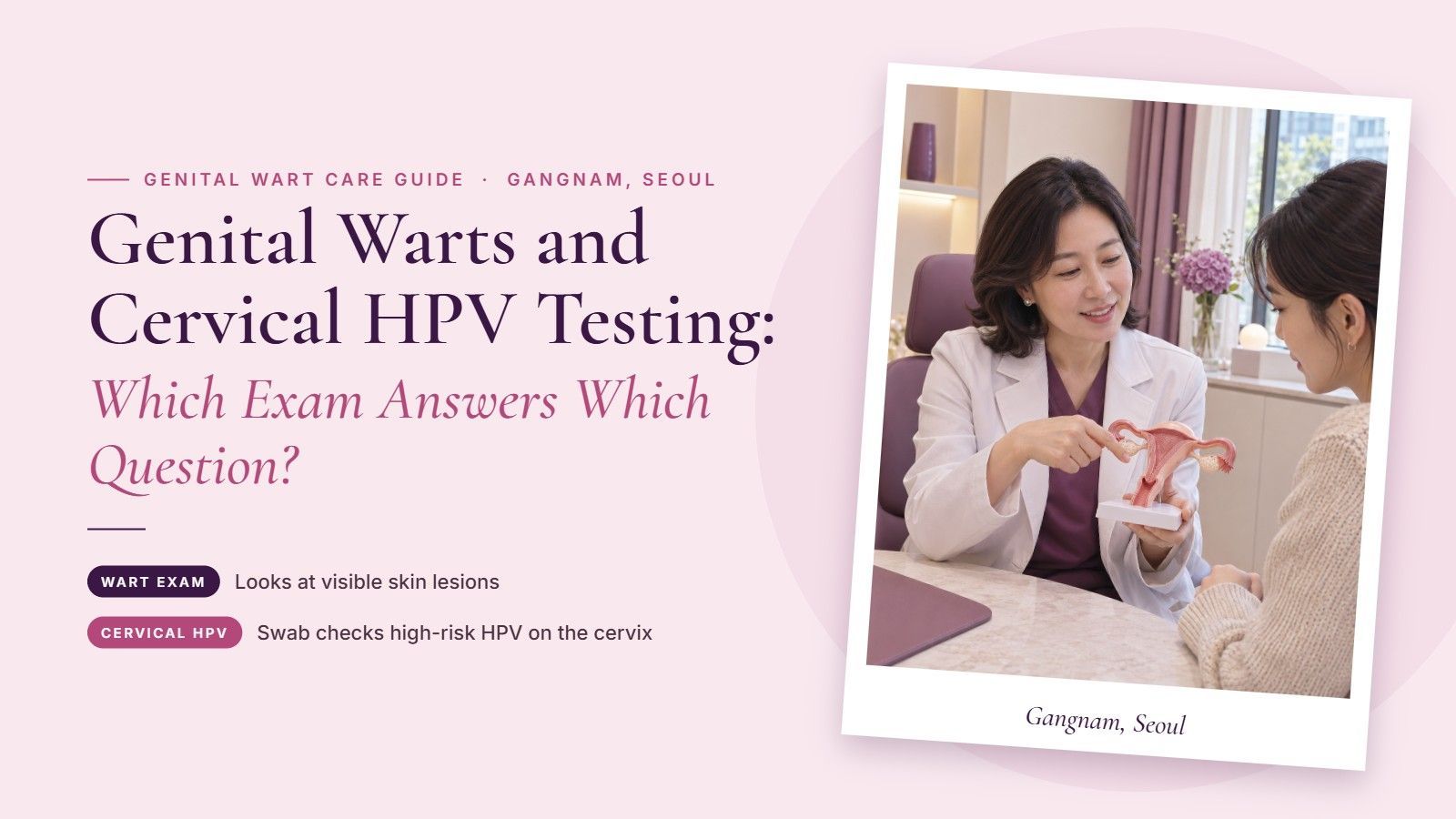
Genital Warts and Cervical HPV Testing: Which Exam Answers Which Question?

Genital Wart Care Guide · Gangnam, Seoul

Genital Warts and Cervical HPV Testing: Which Exam Answers Which Question?


November 20, 2026 · 4 min read
Quick answer

A genital wart exam looks at visible skin lesions, which are usually caused by low-risk HPV types such as 6 and 11. A cervical HPV test checks the cervix for high-risk HPV types, such as 16 and 18, that can lead to cell changes. One does not replace the other.
Genital Warts and Cervical HPV Testing: Which Exam Answers Which Question?

HPV is a large family of viruses, and different types cause different problems. Warts on the skin and HPV on the cervix are checked in different ways and answer different questions. Understanding the difference helps you keep both your skin and cervical health on track.

Low-risk HPV types cause most genital warts
High-risk types are checked on the cervix
Both exams answer different questions

Which exam answers which question?

Question Exam or test
Is this bump a wart? Visual exam of the skin
Do I have high-risk HPV on my cervix? Cervical HPV test
Are there abnormal cervical cells? Pap smear
Which high-risk type is present? HPV genotyping

Key differences

Wart exam

Quick look at the vulva and surrounding skin; no lab test is usually needed.

Cervical HPV test

Swab from the cervix tested in a lab.

Pap smear

Looks at cervical cells under a microscope.

Different types

Having warts does not mean you have high-risk cervical HPV, and vice versa.

What this means for you

  • Have warts? Keep up with cervical screening too.
  • Positive cervical HPV? You may never develop warts.
  • Vaccination The HPV vaccine covers both wart and high-risk types.
  • Partners HPV is very common; most sexually active people meet it at some point.

How to plan your visit

  1. Mention any bumps The doctor can check them during the exam.
  2. Ask about screening Find out whether a Pap smear or HPV test is due.
  3. Combine visits Wart checks and cervical screening can often be done together.
  4. Review results Ask what each result means for follow-up.

Frequently asked questions

Does having genital warts mean I have cervical cancer risk?

Warts are usually caused by low-risk HPV types. Cervical screening checks separately for high-risk types.

Can an HPV test detect genital warts?

Standard cervical HPV tests focus on high-risk types and are not used to diagnose warts.

Do I need a Pap smear if I have warts?

Yes, follow your usual cervical screening schedule.

Which HPV types cause warts?

Most genital warts are caused by HPV 6 and 11.

Can the vaccine prevent both?

Gardasil 9 protects against the main wart types and several high-risk types.

Skin and cervix are checked differently

Ask your OBGYN which exams you need today so nothing is missed.

Related guides

This article is for general information and does not replace a medical consultation. Tests, treatments and prices can vary. Please speak with a doctor about your individual situation.

Can You Get an STI Test and Treatment at the Same Visit in Gangnam?
November 22, 2026
Can you get STI testing and treatment in one visit in Gangnam? Which infections can be treated the same day, when results are needed first and how to plan.
Can Genital Warts Come Back After Removal? What Follow-Up May Involve
November 22, 2026
Why genital warts can come back after removal, how often recurrence happens, what follow-up visits involve and how vaccination and healthy habits may help.
Prescription Treatment vs. In-Office Removal for External Genital Warts
November 22, 2026
Prescription treatment or in-office removal for external genital warts: how creams compare with freezing, cautery or laser, timelines, side effects and costs.
Genital Wart Removal: Cryotherapy vs. Electrocautery
November 22, 2026
Cryotherapy or electrocautery for genital wart removal? How each works, number of sessions, comfort, healing time and how an OBGYN chooses between them.
Genital Warts vs. Skin Tags: How Does an OBGYN Tell Them Apart?
November 21, 2026
Genital warts or skin tags? How an OBGYN tells them apart by appearance and exam, when a biopsy is used, and what treatment options follow.
What to Bring to an STI Follow-Up Visit If You Were Treated Abroad
November 21, 2026
Treated for an STI abroad? What to bring to a follow-up visit in Seoul, including test reports, medication details and dates, so care continues smoothly.
STI Test of Cure vs. Routine Retesting: Why Might You Need Another Appointment?
November 21, 2026
The difference between an STI test of cure and routine retesting, which infections need each, when to book the appointment and why timing matters.
Can Antibiotics You Already Took Affect Your STI Test Results?
November 21, 2026
How antibiotics you already took can affect chlamydia, gonorrhea and other STI test results, when to wait before testing, and what to tell your doctor.
Can You Get an STI Test During Your Period?
November 21, 2026
Can you get an STI test on your period? Which tests are fine during menstruation, which may be better rescheduled, and tips for testing on light or heavy days.
Hepatitis B vs. Hepatitis C Screening: Which Blood Tests Might Be Offered?
November 21, 2026
Which blood tests may be offered for hepatitis B and hepatitis C screening, what HBsAg, anti-HBs and anti-HCV mean, and when vaccination is discussed.